10 Serene Japandi Kitchen Ideas for a Stylish Home

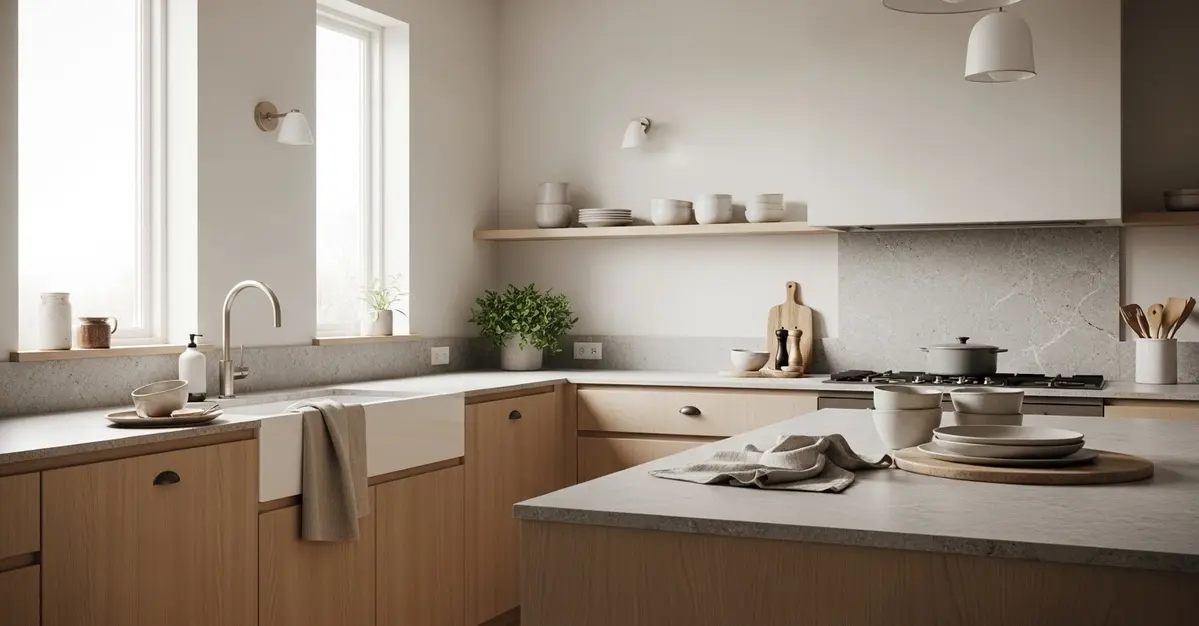
A Japandi kitchen blends Japanese simplicity with Scandinavian practicality. It creates a calm, functional space that feels natural and uncluttered. Unlike flashy or overly decorative kitchens, Japandi focuses on balance, clean lines, and materials that last. This approach makes the kitchen feel spacious, grounded, and welcoming, even in smaller homes. Here are ten ideas to bring this style into your kitchen in a realistic and usable way.
1. Neutral Tones That Feel Natural
A key part of a Japandi kitchen is using colors that feel calm and natural. Soft beiges, warm whites, gentle browns, and muted greys form the base. These colors help light reflect and make the kitchen feel open without being cold. You can add deeper shades like charcoal or forest green in small doses on cabinet doors or backsplash tiles. Natural color choices make it easier to mix wood, stone, and metal elements without creating visual clutter.
2. Wood That Shows Character
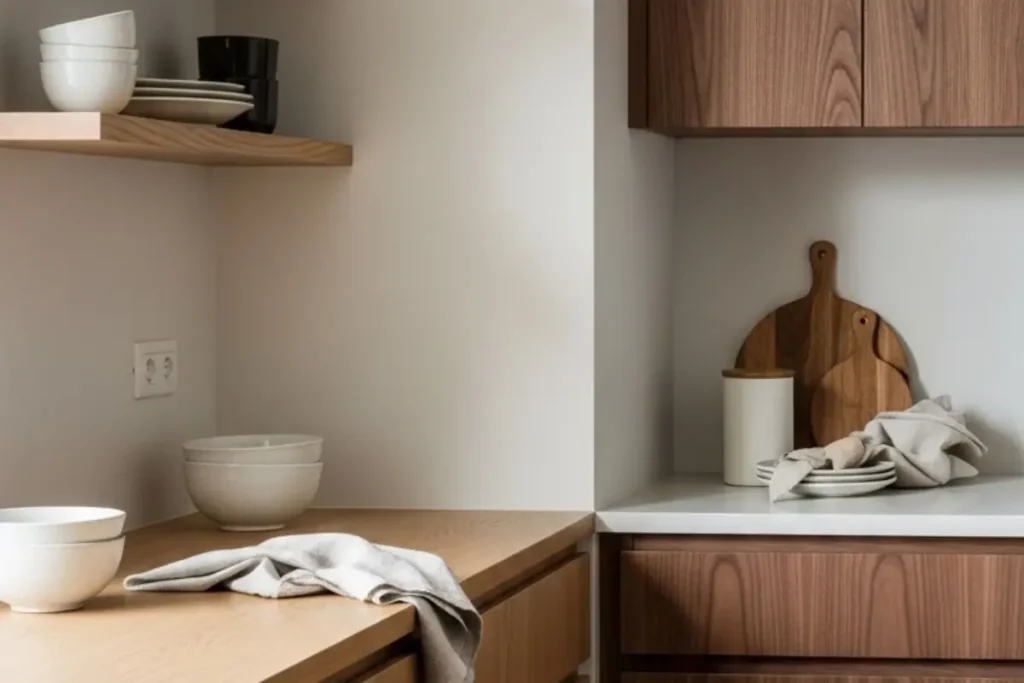
Wood is central in a Japandi kitchen because it brings warmth and texture. Choose woods that have visible grain but remain smooth to the touch. Light woods like oak or ash suit smaller kitchens because they brighten the space, while darker woods like walnut can make larger kitchens feel cozy. Combining different types of wood can work if done carefully. For example, a light wood countertop paired with darker cabinets balances contrast without breaking the calm mood.
3. Simple Cabinet Design
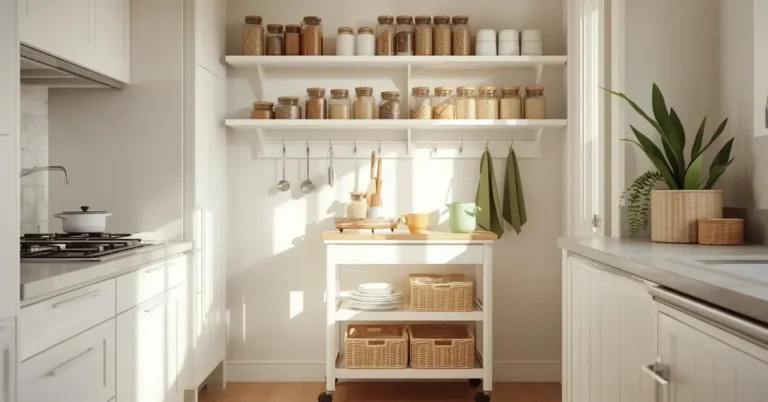
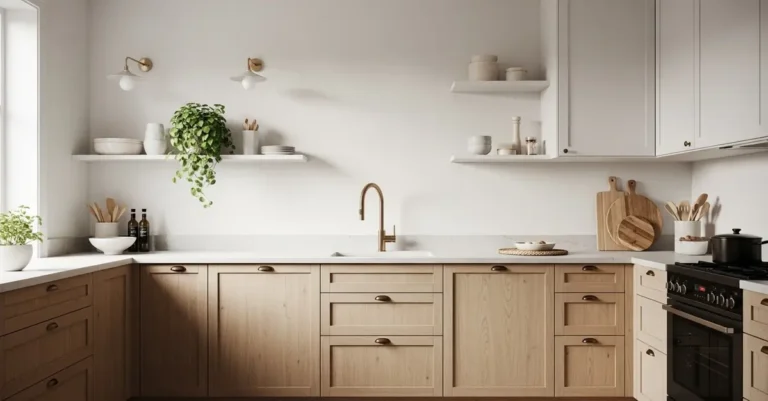
Cabinets in a Japandi kitchen avoid unnecessary details. Flat panels or slab-style doors are common because they emphasize clean lines. Hardware is minimal or sometimes hidden to maintain a seamless look. Open shelving can replace some upper cabinets, letting you display practical items in a tidy way. This approach keeps the kitchen feeling light and easy to maintain.
4. Open Shelves for Display and Function
Open shelves are both practical and decorative in Japandi kitchens. They let you store daily-use items within easy reach while keeping the kitchen airy. Choose simple, neutral-colored dishware and wooden containers to prevent the shelves from looking crowded. Open shelving also encourages mindfulness when arranging kitchen items, helping maintain a sense of order and calm.
5. Countertops That Balance Form and Function
Countertops in a Japandi kitchen are practical but also contribute to the aesthetic. Materials like natural stone, light concrete, or untreated wood create a tactile sense of calm. Surfaces should be durable but not flashy. Keeping countertops mostly clear supports the minimal, uncluttered feel central to Japandi design. Even functional items like a cutting board or mortar and pestle can become part of the visual balance when placed thoughtfully.
6. Lighting That Feels Soft and Even
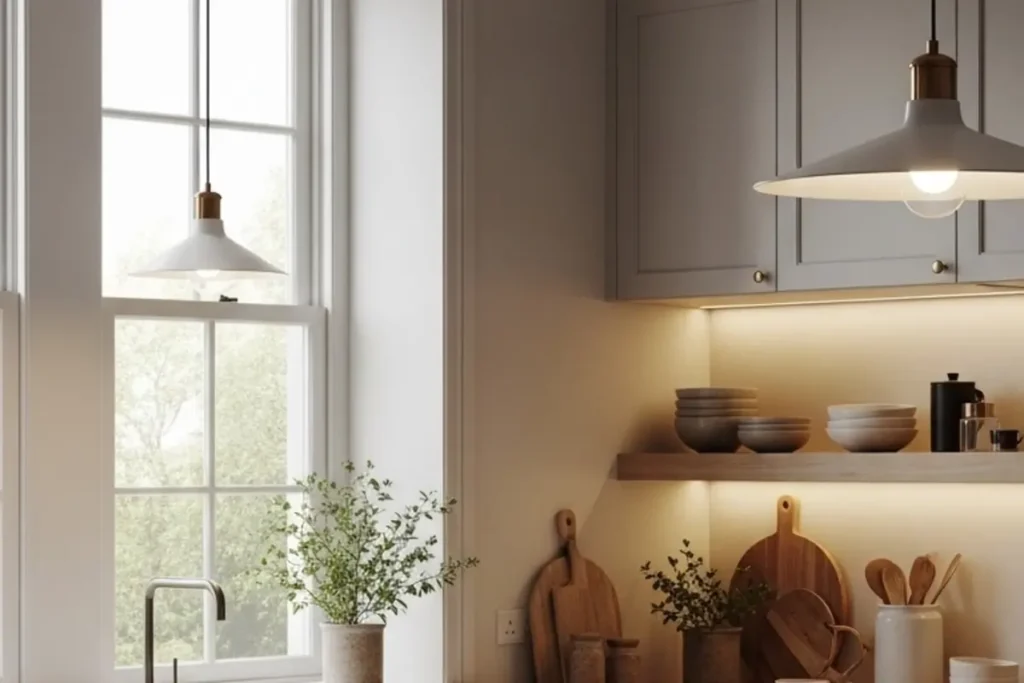
Lighting shapes the mood in a Japandi kitchen more than many people realize. Instead of harsh overhead lights, aim for soft, diffused lighting. Pendant lights with clean lines or simple paper lamps can work well. Natural light is highly valued, so keep windows clear of heavy coverings. When evening comes, warm under-cabinet lights or hidden strips can maintain a relaxed, even glow without creating shadows or glare.
7. Natural Textures Everywhere
Textures help prevent a Japandi kitchen from feeling cold or empty. Think woven baskets, linen towels, ceramic bowls, and stone accessories. Even a simple wooden cutting board or clay pot adds a tactile layer that makes the kitchen feel alive. Using natural textures sparingly ensures they remain calming rather than overwhelming.
8. Minimal Decor That Serves a Purpose
Unlike other kitchen styles, Japandi avoids unnecessary decorations. Every item has a purpose. A small plant, a ceramic vase, or a neatly folded kitchen cloth can function as both decor and utility. The idea is to create a visually calm environment where nothing distracts from cooking or eating. By keeping decor functional and intentional, the kitchen retains its serene atmosphere.
9. Functional Layouts That Make Sense
A Japandi kitchen emphasizes practical layouts that support daily life. Cabinets, shelves, and appliances are arranged for smooth movement and easy access. There’s no need for extravagant kitchen islands if space doesn’t allow; sometimes a compact, well-organized kitchen feels more balanced. Work zones for cooking, prepping, and cleaning are defined by placement rather than walls or partitions, making the flow natural.
10. Subtle Integration of Modern Appliances

Even though Japandi design values simplicity, modern appliances are not avoided. The key is integrating them without breaking the calm aesthetic. Built-in ovens, flush refrigerators, or appliances with muted colors blend seamlessly. Avoid bright displays or shiny surfaces that draw attention. When appliances become part of the design rather than focal points, the kitchen maintains harmony between style and utility.
Final Thoughts
A Japandi kitchen is not about trends or flashy finishes. It’s about creating a space that supports both function and calm living. The combination of neutral tones, natural materials, practical layouts, and intentional decor makes daily routines more peaceful. By focusing on simplicity, texture, and purpose, your kitchen can feel open, organized, and welcoming without sacrificing style. Whether your kitchen is small or large, these ideas help create a space that lasts and remains serene over time.
This approach to kitchen design encourages mindfulness and supports everyday life while remaining visually clean. Applying these principles means your kitchen is not just a room, but a place that enhances the sense of calm in your home.