Simple Solutions to Prevent Leaks and Water Damage With Sealants

Water damage is one of the most common and costly problems faced by homeowners and commercial property owners alike. Small gaps, worn joints, and ageing seals can allow moisture to seep in unnoticed, leading to damp, mould growth, and long term structural damage. Fortunately, sealants offer a simple yet highly effective solution for preventing leaks and protecting buildings from water related issues.
Working with a professional Mastic Sealant Company ensures that the correct products and application methods are used for each area of a property. From bathrooms and kitchens to windows, roofs, and expansion joints, high quality sealant work plays a vital role in maintaining a dry and durable structure.
This guide explains how sealants help prevent leaks, where they are most effective, and why professional application makes a lasting difference.
Why Sealants Are Essential for Leak Prevention
Sealants act as a protective barrier that blocks water, air, and contaminants from entering gaps and joints within a building. Over time, movement, temperature changes, and wear can cause cracks to appear in areas that were once secure.
Sealants are essential because they:
- Create a flexible waterproof seal
- Accommodate natural building movement
- Protect surfaces from moisture penetration
- Reduce the risk of rot, corrosion, and mould
When applied correctly, sealants help maintain both the appearance and structural integrity of a property.
Common Areas Where Leaks Occur
Leaks often develop in predictable locations, especially where different materials meet. Identifying and sealing these areas early can prevent costly repairs later.
Typical problem areas include:
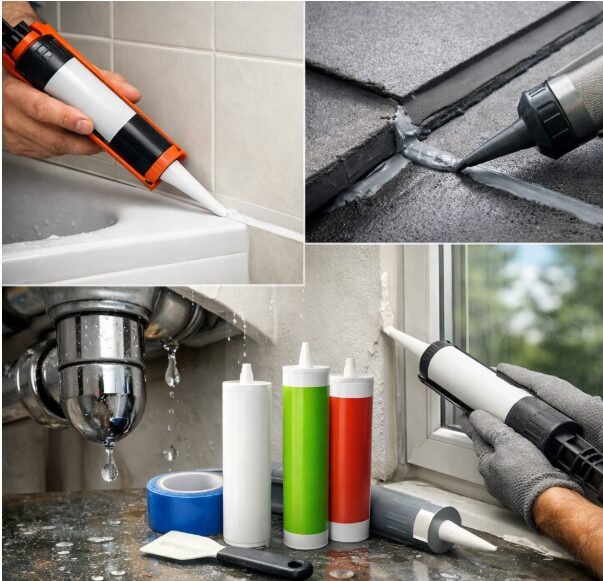
- Bathrooms and showers around baths, sinks, and trays
- Kitchens around worktops, splashbacks, and sinks
- Windows and doors where frames meet walls
- Roof joints, flashing, and gutter connections
- Expansion joints in commercial and larger buildings
Addressing these vulnerable points with appropriate sealants significantly reduces the risk of water damage.
Types of Sealants and Their Uses
Not all sealants are the same, and choosing the right type is crucial for long term performance. Different environments require specific properties such as flexibility, durability, and resistance to moisture or temperature changes.
Common sealant types include:
- Silicone sealants for wet areas like bathrooms and kitchens
- Polyurethane sealants for external joints and heavy duty use
- Acrylic sealants for internal gaps and decorative finishes
- Fire rated sealants for areas requiring enhanced safety
Using the correct sealant ensures reliable protection and a neat, professional finish.
How Sealants Prevent Long Term Water Damage
Water damage often develops gradually, making it difficult to detect until significant harm has already occurred. Sealants act as a preventative measure, stopping moisture at the surface before it can penetrate deeper layers.
Effective sealing helps to:
- Prevent damp patches and staining
- Reduce the likelihood of mould and mildew
- Protect timber from rot
- Preserve insulation and internal finishes
By keeping water out, sealants help maintain a healthier indoor environment and reduce ongoing maintenance costs.
The Importance of Proper Application
Even the best sealant will fail if it is not applied correctly. Poor surface preparation, incorrect tooling, or using the wrong product can lead to early breakdown and leaks.
Professional application ensures:
- Thorough cleaning and preparation of surfaces
- Correct sealant selection for each area
- Even, well tooled joints with strong adhesion
- Long lasting performance and visual consistency
Attention to detail during installation is key to achieving reliable results.
Signs That Sealants Need Replacing
Sealants do not last forever and should be inspected regularly. Replacing worn sealant early prevents minor issues from becoming major problems.
Look out for signs such as:
- Cracking or shrinking of joints
- Discolouration or mould growth
- Peeling or loss of adhesion
- Water stains near sealed areas
Timely replacement helps maintain protection and prevents further damage.
Benefits of Professional Sealant Services
While small repairs may seem straightforward, professional sealant services offer a higher standard of durability and finish. Experienced specialists understand how different materials behave and how to create joints that last.
Benefits include:
- Expert assessment of problem areas
- Use of high quality, industry approved materials
- Clean, precise workmanship
- Reduced risk of repeat leaks
Professional sealing provides peace of mind and long term value.
Preventative Maintenance for Ongoing Protection
Regular maintenance plays an important role in keeping sealants effective. Simple checks and occasional resealing can significantly extend the life of a building’s surfaces.
Preventative steps include:
- Inspecting sealant joints annually
- Cleaning wet areas to prevent mould build up
- Repairing small defects promptly
- Scheduling professional resealing when needed
A proactive approach minimises disruption and repair costs.
Final Thoughts
Preventing leaks and water damage does not always require major renovations. Often, the most effective solutions are simple and focused, with quality sealants playing a central role. When applied correctly, sealants provide flexible, long lasting protection that safeguards both residential and commercial properties.
Choosing a reliable Mastic Sealant Company ensures expert application, appropriate material selection, and durable results. By investing in professional sealant solutions and regular maintenance, property owners can protect their buildings from water damage, preserve their appearance, and avoid unnecessary repair expenses in the future.