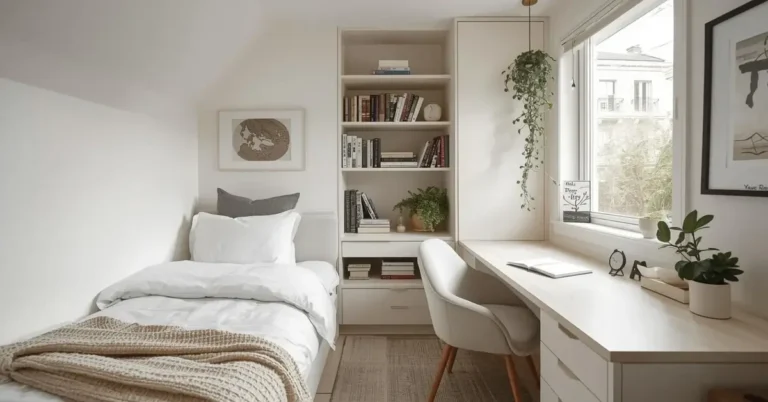
10 Japandi Home Office Ideas That Mix Calm and Function


A Japandi home office feels simple, steady, and easy to use. It brings together the warm feel of Japanese homes and the clean lines of Scandinavian style. Many people work from home now, and a space that supports calm focus can make a real difference in how the day goes. This style works well because it removes what you do not need and keeps what helps you move through your tasks in a steady way. When the room stays clear and the mind stays clear, work feels smoother. A Japandi office does not try to look perfect. Instead, it lets you settle in without pressure. With the right setup, even a small room can feel open and useful.
Creating this kind of home office does not mean buying expensive things. The idea is to use simple shapes, soft colors, and natural materials. You pay attention to how the room feels when you walk in. You notice if the desk is easy to reach, if the light helps you work, and if you have space to breathe between tasks. These small details create a steady flow that carries you through the day. Over time, a Japandi office supports better focus because nothing jumps out or demands attention. The room becomes a steady background for your thoughts.
Below are ten ideas that bring calm and function together. Each idea adds depth and helps you set up a space that feels real, grounded, and easy to use every day.
1. A Desk That Brings Steady Flow to the Room
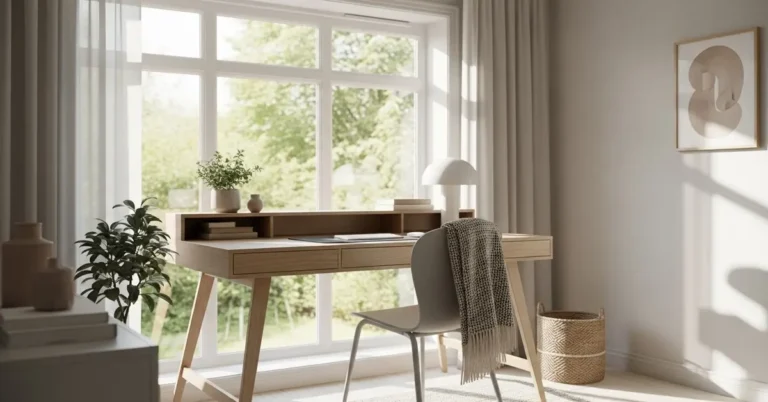
A Japandi office starts with a desk that feels stable and easy to use. Shape and material matter because they guide how you sit and move. A desk made of wood with simple legs often fits well. Wood helps the room feel grounded, and the simple shape keeps the space open. The right desk gives enough room for your hands, your laptop, and a notebook without feeling crowded. When the desk has a clean top, your eyes rest more easily. This lowers small stress that builds up during long work days.
Place the desk where you get natural light but without glare. Light supports your work when it falls softly across the surface. It helps you stay awake without feeling tense. The desk should not block movement in the room. When you walk in or stand up, the path should stay clear. This gives your mind a small sense of ease that builds over time. A good desk does not only hold your work tools. It becomes the anchor of the room, giving the whole space a steady center.
2. A Quiet Color Palette That Clears the Mind
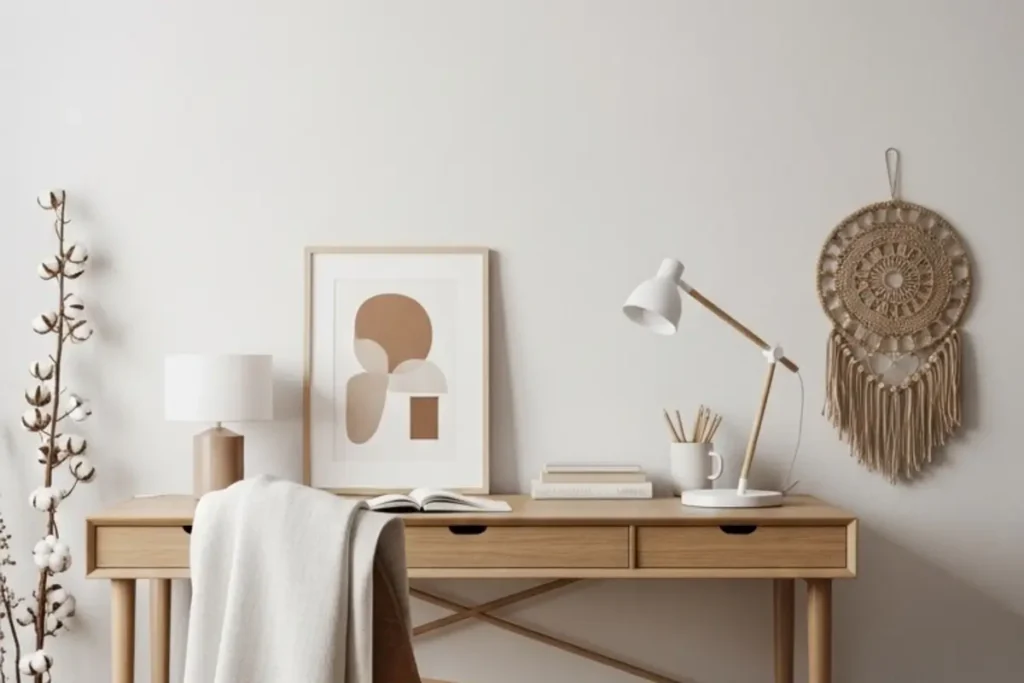
Color plays a big role in how a Japandi home office feels. Soft tones help the mind slow down. They do not pull attention away from your work. Whites, beiges, soft browns, and gentle grays often work well because they keep the room bright without making it look busy. These colors create a base that blends with natural materials like wood, stone, and cotton.
When you use colors this way, the room feels like it takes a slow breath. You can feel your shoulders loosen when you sit down. A calm palette also helps you think more clearly. Many people do not notice how much bright colors pull at their focus until they switch to softer tones. Over time, you notice that your thoughts settle more quickly, and work feels less rushed. The goal is not to make the room look plain. The goal is to let the room step back so your focus can step forward.
3. Natural Light That Keeps the Space Awake Without Strain
Light shapes how you feel in a room more than most people realize. Japandi style values soft, natural light that moves across the room during the day. When you place your desk near a window, the work area stays bright without feeling harsh. Natural light helps keep your energy steady and lowers eye strain. It also gives a sense of time moving slowly and naturally.
Window coverings should let you control brightness without blocking everything out. Simple fabric coverings or thin blinds help soften the light. When the light becomes gentle, the whole room feels more open. Even a small home office can feel larger when the light spreads evenly. Natural light also works well with wood and soft colors, making the room feel connected to the outdoors. This connection brings a sense of balance, which supports long hours of focused work.
4. A Chair That Supports Long Work Days Without Distraction
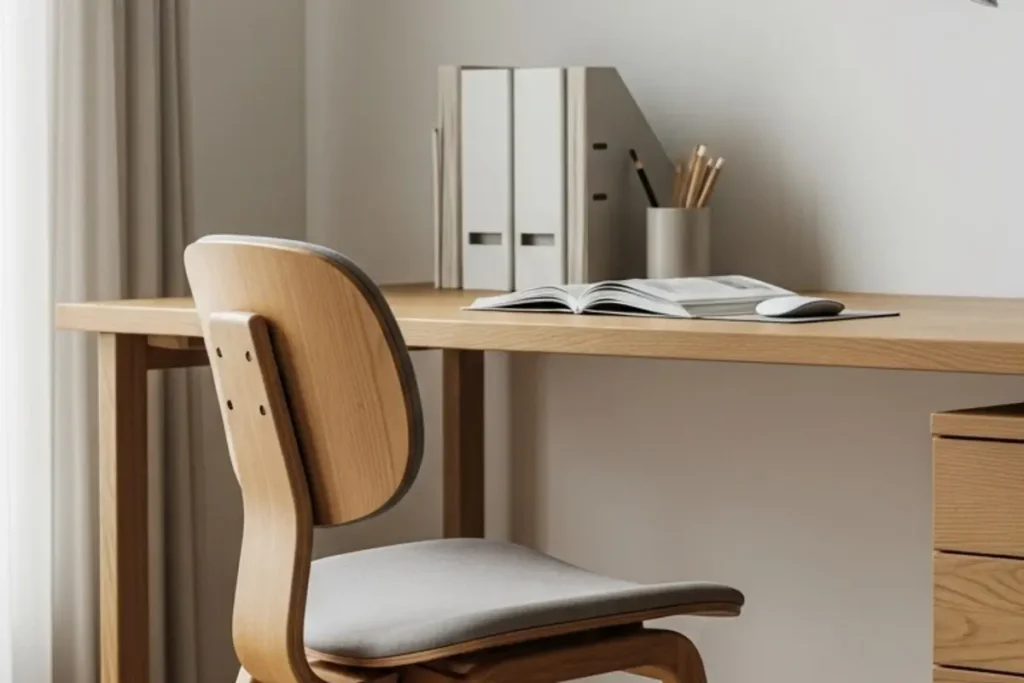
A Japandi office chair should feel stable, simple, and comfortable without extra details that pull attention. The chair should support your back and let your feet rest flat on the floor. When your body sits in a natural position, you work longer without feeling tired. A chair with a soft cushion or a curved back often works well because it supports the spine.
The shape and material of the chair should match the calm feeling of the room. Wood frames or simple woven seats blend well with other Japandi pieces. When the chair does not squeak, wobble, or feel heavy, you stay more focused. A good chair does not need to look complicated. It only needs to help you stay grounded and steady as you work.
5. Storage That Keeps the Space Light and Clear
A Japandi home office stays calm because items have a place to go. Storage matters more than many people think. When papers, books, or tools do not crowd the desk, the mind stays clear. Soft-closing drawers, open shelves, or simple cabinets made of wood help keep the space neat. Storage should be easy to reach without breaking focus.
When everything has a home, you spend less time thinking about clutter. The room feels lighter because nothing piles up. This creates a quiet flow that supports your work. Good storage does not have to hold everything you own. It only needs to hold what you use each day. When you keep this balance, the space stays open and calm, which helps you stay productive.
6. Natural Materials That Bring a Sense of Warmth
Japandi style relies on materials that feel natural to the touch. Wood, cotton, linen, bamboo, and stone create a warm base. They do not overwhelm the room. Instead, they add a gentle sense of grounding. When you place your hands on a wooden desk or rest your feet on a soft cotton rug, the textures create a sense of calm. These small touches help the room feel alive without looking busy.
Natural materials also age well. They show small marks over time, which makes the space feel lived in rather than staged. This adds honest character to the room. When you use natural materials, you also avoid the sharp, plastic feel that can make a workspace feel cold. The room becomes a place where you can settle in and think clearly.
7. A Layout That Guides Movement Without Friction
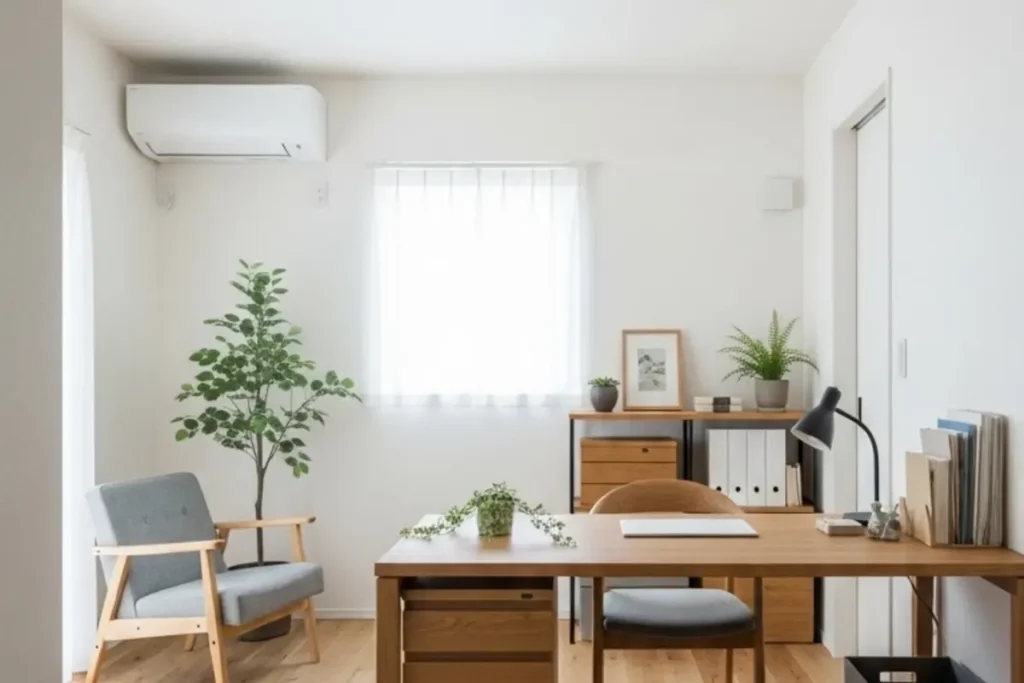
The way you arrange the room affects how you feel. A Japandi home office layout should support easy movement. You should be able to reach your desk, storage, and seating area without weaving through obstacles. When your path stays open, the mind stays open too. This simple idea helps create a room that feels clean and calm even before you sit down.
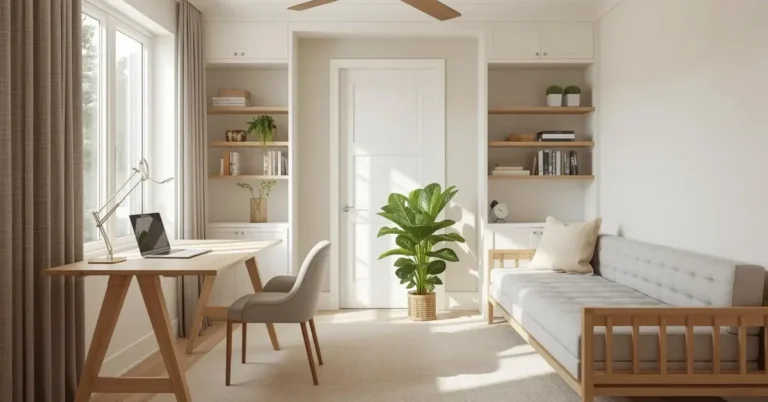
Try to keep the main work area free from heavy items. A light layout supports natural flow. Place storage near the desk so you do not have to stand up each time you need something. Keep the seating area or reading corner away from the main work zone so you can switch between tasks smoothly. When the layout stays simple, the whole room feels more welcoming. You step into the room and know exactly where to go.
8. Quiet Decor That Brings Balance Without Clutter
Decor in a Japandi home office should be gentle and meaningful. A small plant, a simple vase, or a framed print with soft tones can bring life to the room without crowding it. The goal is not to fill space. The goal is to create a sense of balance. When decor stays simple, your eyes rest easily. This helps lower mental noise.
The key is to choose pieces that make the room feel steady. Too many items make the room feel busy. A few well-placed pieces help the room feel complete. Plants work well because they bring a slow, natural rhythm. A single ceramic vase or a small tray for pens adds calm order. In a Japandi office, decor should guide your mood, not distract it. When the room feels balanced, you work with more ease.
9. A Reading or Break Corner That Lets You Reset
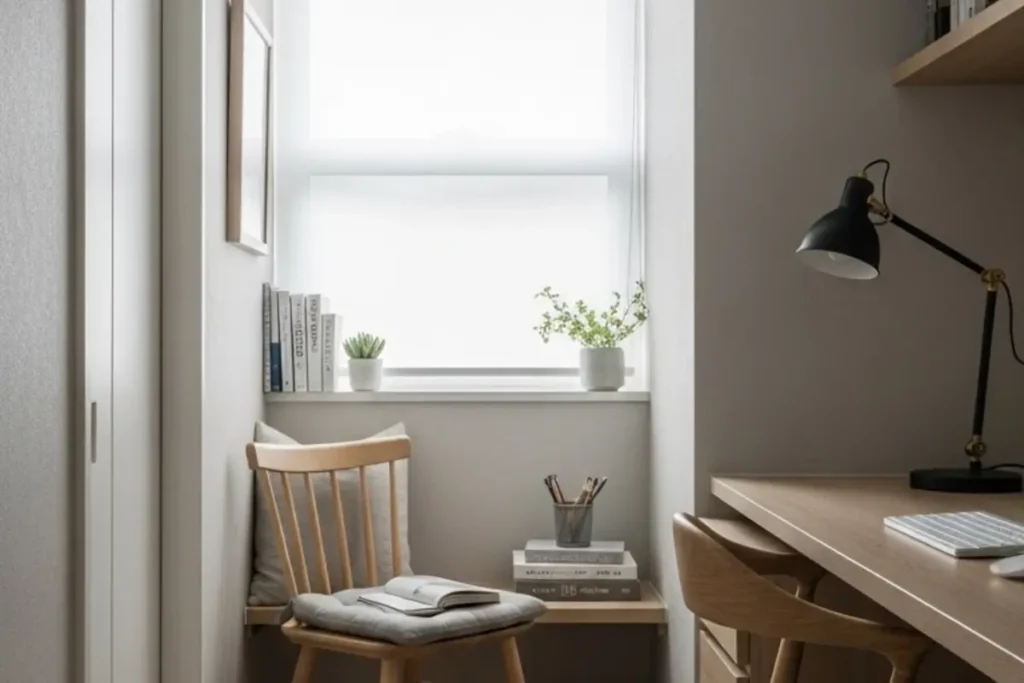
A Japandi home office works best when you have a small area for breaks. It does not have to be large. A simple chair or small bench in a corner can be enough. This space lets your mind reset when your focus fades. When you step away from the desk, you shift your thoughts for a moment. This helps you return to work feeling lighter.
The break corner should stay uncluttered. Soft light and a simple cushion can help the area feel calm. This space is not for distractions. It is for quiet moments that help you breathe between tasks. When your office includes a spot like this, work feels more balanced. You can step away without leaving the room, and this small pause often brings new energy.
10. A Mindset of Simplicity That Keeps the Office Steady
At the core of Japandi style is a mindset of simplicity. This idea guides every choice in the home office. You keep what helps you work and let go of what adds noise. When you stay thoughtful about what you bring into the room, the space supports your day instead of competing with it.
This mindset does not mean the room must look empty. It means the room holds only what matters. This creates steadiness that carries into your work. When you sit down in a space that feels clear, your thoughts become clear too. Over time, this mindset becomes a habit. You tidy without thinking about it. You choose tools that last. You work with more focus because the space supports you.
A Japandi home office built with this mindset becomes a place you enjoy returning to. It is not just a workspace. It becomes a steady part of your day, helping you stay grounded through busy times.
Final Thoughts
A Japandi home office blends calm and function in a way that supports real daily life. It does not rely on trends or complex decor. It focuses on how a space feels and how smoothly it works. When you build your office with steady materials, soft light, simple shapes, and thoughtful storage, the room becomes a quiet partner in your work. You think more clearly, move more easily, and feel more grounded throughout the day.